
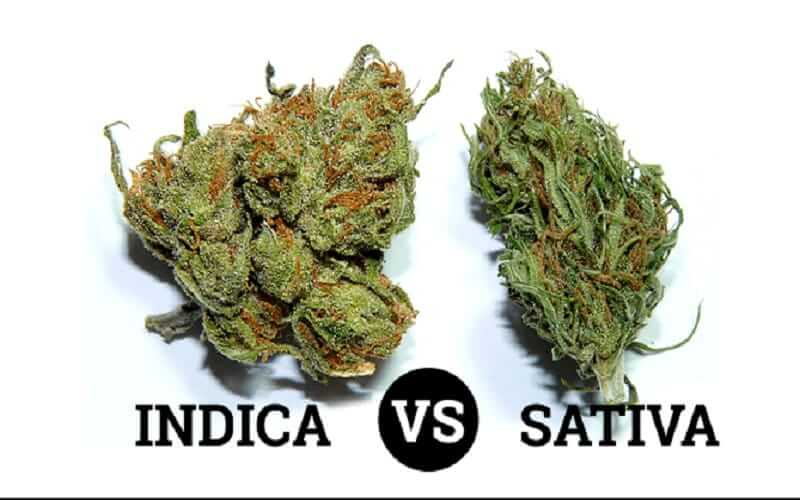
Cannabis is not a monolithic plant. It has several strains; some are pure, some are hybrid. In ancient times, people used to search for different cannabis strains. Nowadays, the development of agricultural and horticultural technologies allows them to breed and grow new strains.
In this article, we’ll discuss the two major strains – cannabis indica and sativa, and compare each to the other.
Cannabis indica strain
Indica strains are a bit small in size and appearance. Typically, a plant doesn’t grow more than six feet. An amateur may not be able to identify an indica strain, but an expert can easily recognise it by its fat leaves. The fat leaves are an exquisite feature of this strain. Another equally exotic feature is its brief flowering cycle.
The origin of the indica strain is the Hindu Kush mountain of modern-day Afghanistan. The region has historically been annexed to greater Indian empires, hence the name “Indica”. A harsh and non-tropical climate is ideal for the nourishment of the C. Indica strain. India, Pakistan, Bangladesh and Nepal are the key producers of this strain. Cannabis is often mentioned in the cultural history of these regions. Because of high THC, this strain is used for recreational purposes.
Cannabis sativa strain
Plants belonging to this strain are herbaceous and flower once a year. The origin of this plant is eastern Asia, but now it is harvested globally. Unlike the cannabis indica strain, sativa has a wide range of uses that include medicinal, industrial, food processing and more.
The cannabis sativa strain has a moderate amount of THC in it. The strain has more than 100 cannabinoids in it and 500 compounds. The most significant cannabinoid found in the sativa strain is cannabidiol (CBD), which is a great pain reliever. THC and CBD apart, CBN and dronabinol are other important cannabinoids found in the sativa strain.
Cannabis sativa is more popular than the indica strain, chiefly because its usage is way more varied. It is used to produce hempseed oil. Hemp seed oil is an animal feed, used in lamps and industrial paint. The medicinal properties of cannabis sativa include providing relief from pain and inflammation, and it is used in herbal ointment preparation.
Difference in cultivation
Appearance-wise, the indica strain is more bushy than the sativa strain. The major difference between the two strains is how they are cultivated.
There’s little difference between the light exposure during the vegetative and flowering stages. Both strains require increased exposure to light during the vegetative stage and at least 12 hours of darkness during the flowering stage.
But the key difference lies in other techniques of cultivation. Because indica plants are not very tall, growers use more horizontal space and less vertical space to grow them. Growers also use the sea of green (SoG) technique, which involves growing a large number of them and not pruning as the plants are small in size.
Growing sativa plants requires a horizontally large room. Breezing is required for indica cultivation, not so much for sativa cultivation. Sativa plants have protection against mould; indica plants don’t, as they come from a harsh and temperate climate.
Differences in genetics
The genetics of the two strains differ significantly in terms of THC, CBD ratio and cannabinoid production. THCA and CBDA synthases are two enzymes. Sativa plants produce genes that code for CBDA synthase, and plants from the indica strain produce THCA synthase genes. When heat is applied, the CBDA synthase turns into CBD and the THCA synthase into THC.
Because sativa strains have a relatively high CBD: THC ratio, smoking such strains alleviates anxiety and increases calmness. On the other hand, high THC-to-CBD ratio strains make one high because of the increased THC in them. That being said, there’s a lack of consensus among the experts regarding the ratio between THC and CBD in cannabis strains.
Debate among scientists
Scientists are divided when it comes to the genetics and etymology of sativa and indica strains. An esteemed researcher called Dr Kymron DeCesare said, “Words like sativa and indica are no longer reliable indicators of drug content.” Dr DeCesare and other like-minded scientists believe that when strains are checked in the laboratory, it is primarily to determine their medical efficacy.
There’s definitely some truth to this. In the past, the terms ‘sativa’ and ‘indica’ were used to describe the physical appearance of the cannabis plant. Back then, science was not so developed, and people used to separate the strains on the basis of their morphological properties. Today, when cannabis producers label their product, they separate the strains by the effect they cause.
Summing up
Consumers are less concerned about the strain. Those who consume marijuana for recreation just want to get high, and those who consume it for medical reasons want relief from pain and inflammation. Still, learning about the strains is important if you are curious about cannabis-related stuff.